
Remediation wells: Dai Prà's air-pulse patent.
A mobile unit that brings together the tools to inspect, clean and rehabilitate drainage wells, with automation and data management for the work carried out.
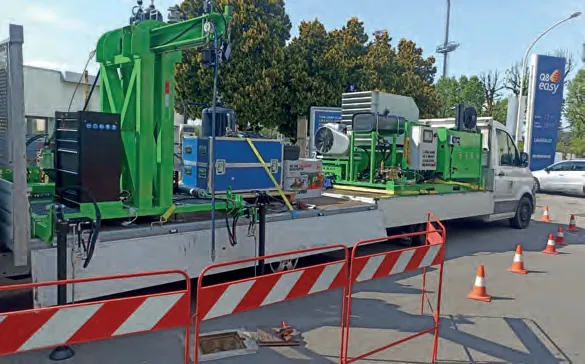
All the tools for the job, on a single platform.
Remediating contaminated sites can require drainage wells to be cleaned and rehabilitated. For this application Dai Prà has developed an integrated system that can be mounted on a small truck: a mobile solution for reaching different work points with all the equipment on one vehicle.
The configuration shown in the catalogue also allows reagents and oxidants to be injected. The set-up combines several tools for well work with automated data management.
The core of the project is integration: not a single tool, but a platform offering different techniques for inspection and cleaning. Mobility means the equipment can be taken to different work points; which tools to use, however, should depend on the conditions found and the work programme.
In this context, cleaning a well and remediating a site should not be confused. The unit is a tool supporting the activities set out in the project: the treatment solution and any use of reagents must be defined according to the site and the assessments of the responsible engineers.
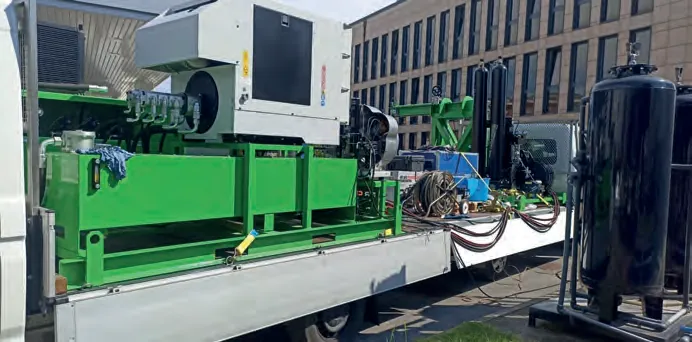
From inspection to well cleaning.
The system described in the catalogue combines the following techniques and equipment:
- Video inspection of the well.
- Pistoning (surging).
- Brushing.
- Jetting tools.
- Air lifting.
- Air-pulse generator.
Having video inspection, mechanical action and water- or air-based tools available means the work can be assessed without reducing every situation to a single technique. Video inspection provides visual information on the well; pistoning, brushing, jetting and air lifting are the different working options listed for the set-up.
This is not a mandatory sequence to be carried out in full on every well. To plan the work, it helps to describe the problem observed, gather the available information and agree on the relevant tools. The catalogue presents the system’s equipment, not a universal rehabilitation protocol.
The patented air-pulse generator.
Among the tools shown, the generator produces air pulses to help break up and remove blockages. The General Catalogue presents this technology as patented by Dai Prà.
The generator is part of the platform alongside the other equipment: air pulses are one of the methods available for tackling blockages. Whether to use it must be assessed in light of the well and the planned work, rather than assuming a guaranteed result simply because the device is there.
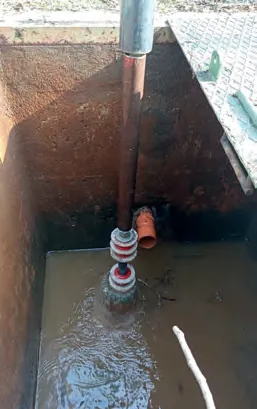
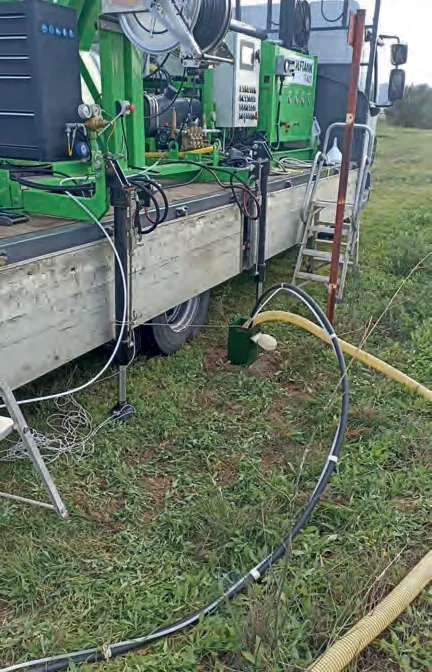
Log the work, keep the data.
The system provides automated data logging, storage and download functions. Information from inspection and cleaning activities can thus be stored and consulted in digital form, supporting the analysis and traceability of the work.
Alongside the equipment itself, the catalogue also gives space to documenting the work. Collecting and storing data provides a searchable record of the job: something to consider when defining the set-up, by clarifying what information those overseeing the project need.
Assessing the set-up for your project.
To find out more about this solution, contact the Dai Prà team with a description of the well and the planned work. The choice of set-up and equipment must be confirmed for each individual project.
To get the conversation started, it helps to share what you know about the well’s geometry and accessibility, the conditions observed and any previous maintenance. If grouting is planned, tell us which materials need to be handled so we can discuss their compatibility with the equipment.
Round out the picture with your transport and work-documentation requirements. This information helps us assess the mobile platform, the tools and data management together, keeping the choice of unit tied to the site’s actual needs.
Source: Dai Prà, General Catalogue — 26l03rev3web, page 22, “Wells for remediation of polluted sites”. Text adapted from the catalogue section; original photographs from the same page. The patent statement is as given in the catalogue.
Planning work on wells?
Let’s talk it through and assess the set-up together.