Self lifting. The self-lifting grout plant for tunnels.
A system developed to treat cracks and water ingress in existing tunnels, with a truck-mounted plant for carrying out tunnel work quickly.
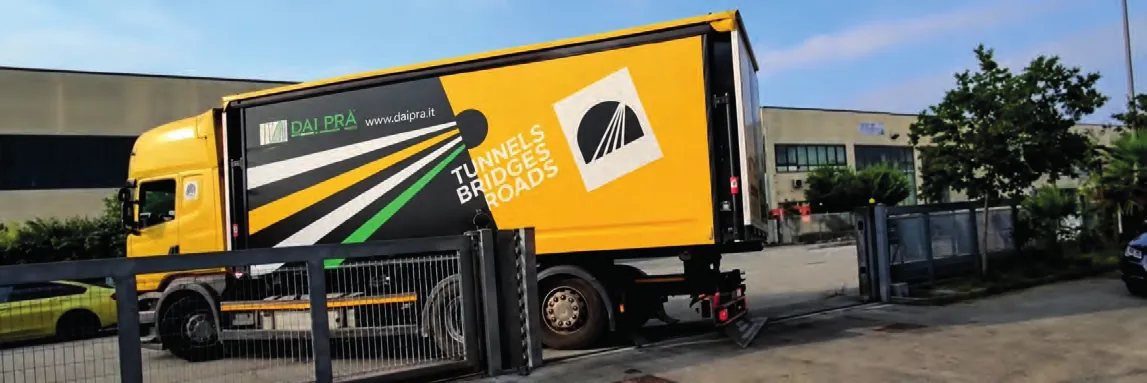
Four lifting cylinders.
Cracks and water ingress in existing tunnels are the starting point of the Self lifting project. Dai Prà developed this solution to bring together on a transportable plant the equipment needed for mix preparation and grouting, organising tunnel maintenance work around a single set-up.
The system described in the catalogue uses four hydraulic cylinders for lifting and positioning on 7-metre trucks. Self-lifting therefore concerns how the plant is handled: a feature to weigh up alongside the vehicle’s footprint and site access requirements, not a different grouting technique.
Integrating the equipment on the truck links two aspects of the job: how to reach the work point and how to lay out the mixing and pumping line. Assessing a set-up means starting from both, checking the space available and the work to be done in the tunnel.
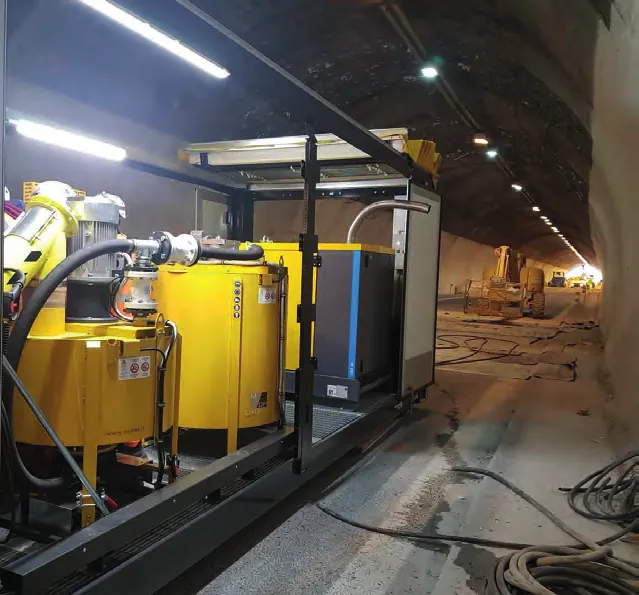
From mix preparation to grouting.
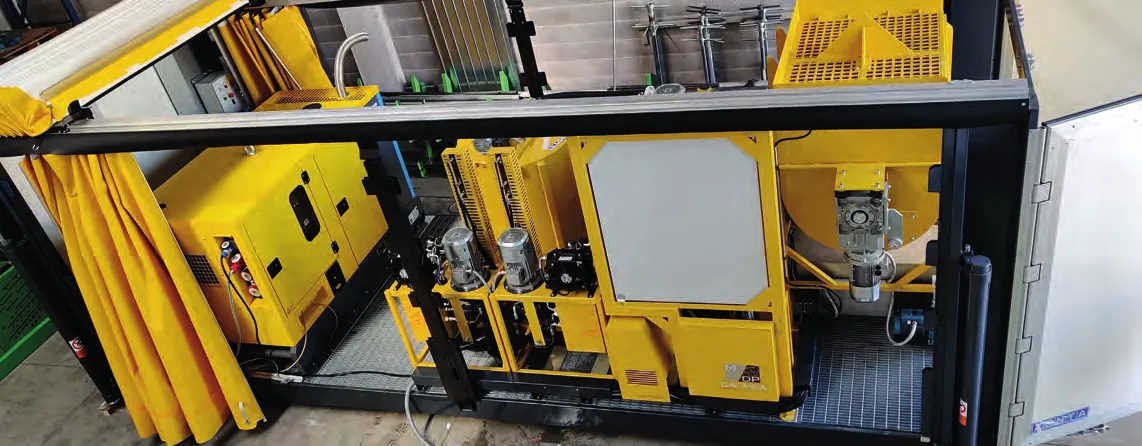
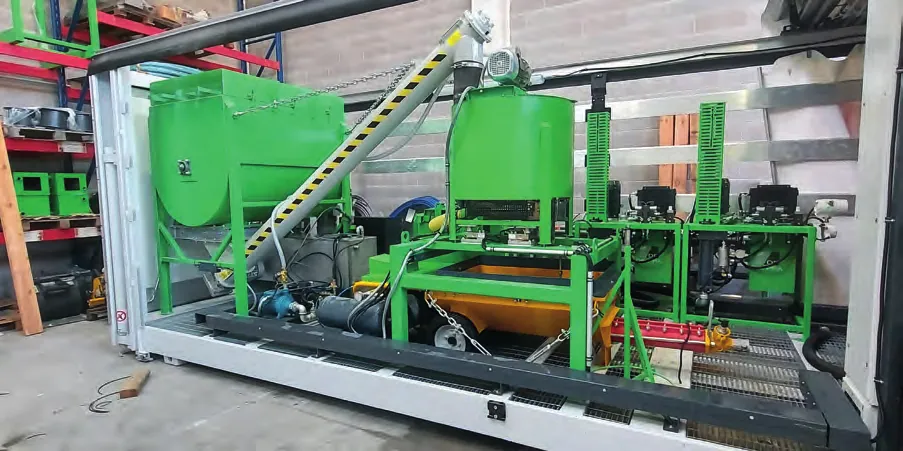
The set-up shown in the catalogue includes:
- Preparation: special mixer for 1,500 kg big bags, screw conveyor, colloidal mixer with load cells, and agitator.
- Grouting: two piston pumps.
- Power: 50 kW generator.
- Water handling and washing: water feed pump, water tank, high-pressure washer and bottom tray for dirty liquids.
Settings from the PLC panel.
The PLC electrical panel lets you set cement and water quantities, mixing time, and grouting pressure and flow rate. The catalogue also describes the panel as used to set automatic operation and program the required values.
Preparation and grouting remain two distinct stages of the process, even when they are combined in the same plant. Batching and mixing time relate to preparation; pressure and flow rate relate to the grouting stage. Defining these parameters with the person in charge of the work helps identify control requirements before choosing the configuration.
The colloidal mixer’s load cells are part of the set-up described. The PLC should be considered together with the line’s equipment and the values to be managed: the control configuration must be agreed according to the job, without assuming every plant has the same settings or performance.
Explore Dai Prà automation →Also with a screw pump.
The configurations shown include a Self lifting unit with two piston pumps and a screw pump, suited to larger particle sizes or continuous output.
This variant shows why the Self lifting name alone does not define every feature of the pumping line. The handling solution can come with different equipment: the material to be pumped and the required production mode are therefore points to clarify along with logistics.
What information to start with.
To discuss a plant for tunnel maintenance, prepare a description of the work, the planned mixes and the access conditions. Also state your power, water supply and wash-water handling requirements: the catalogue includes a generator, a water tank and a bottom tray for dirty liquids, items to be assessed in the context of the site.
The equipment listed refers to the set-ups shown in the catalogue. Sizing, mix compatibility and operating parameters must be verified for each specific project.
Source: Dai Prà general catalogue, 26l03rev3web, “Tunnel Maintenance” section, PDF pages 11–12. Text translated and arranged from the catalogue; original photographs extracted from the catalogue.
A grout plant for your site.
Talk to our team about your project’s requirements.