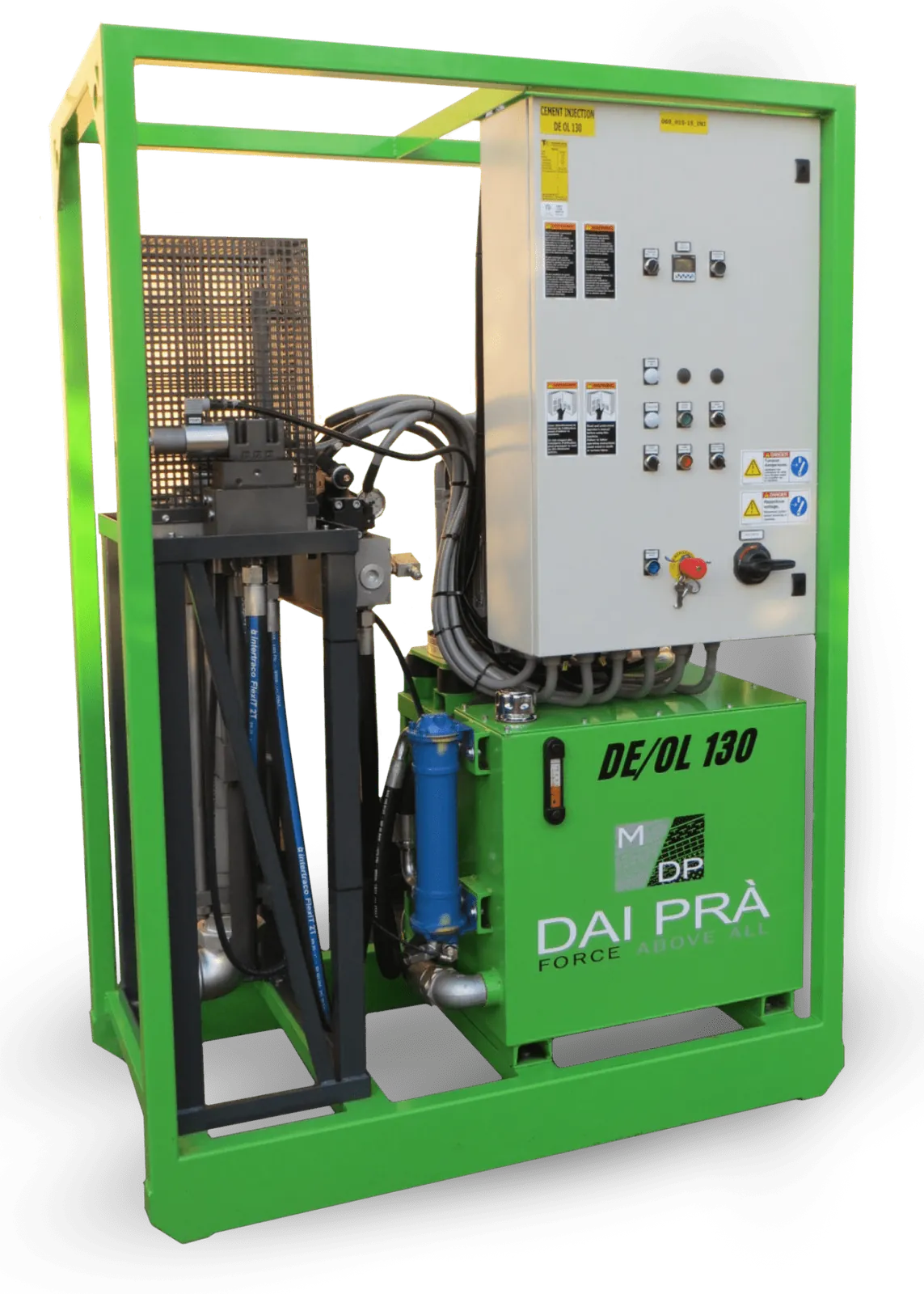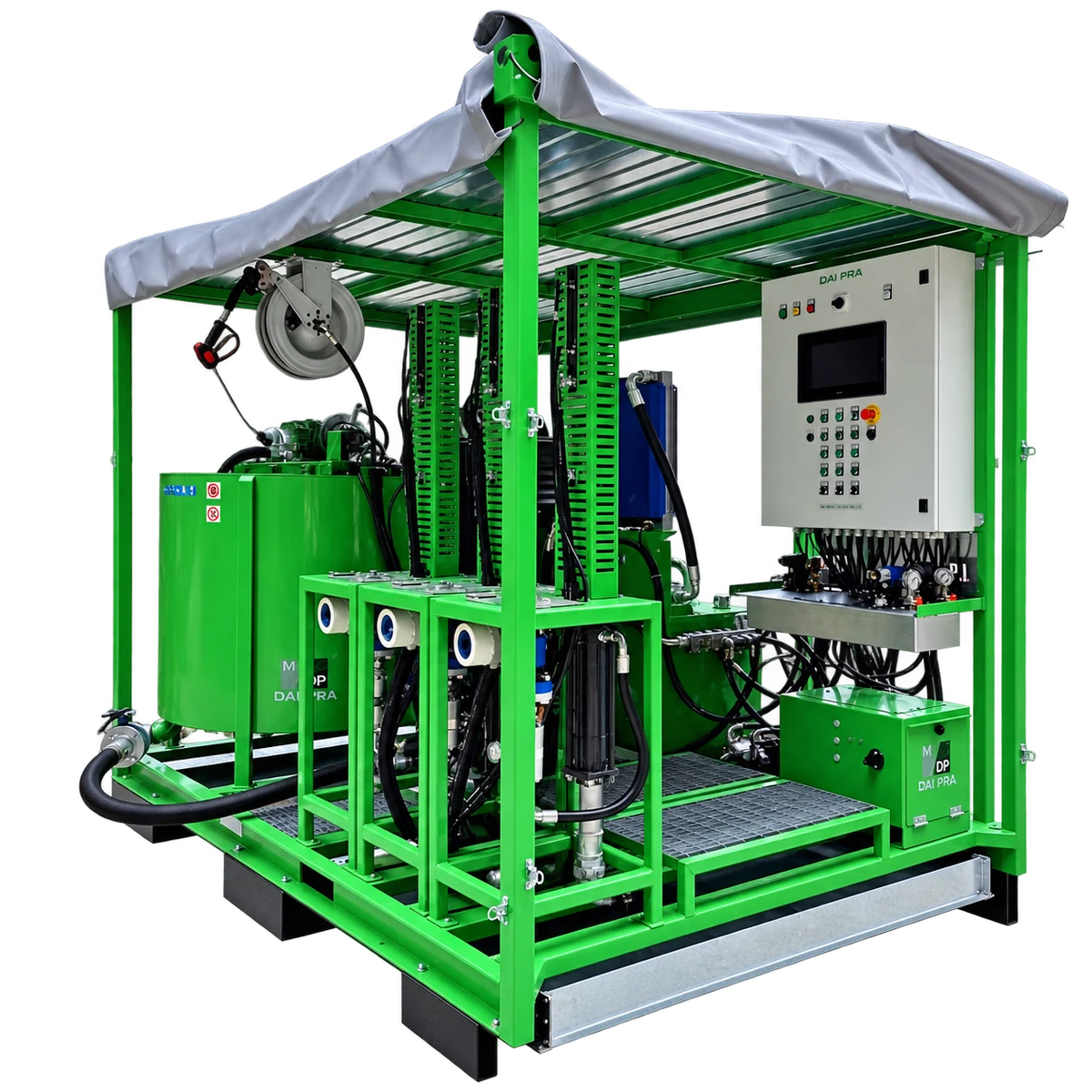
How to choose your grout plant.
Five steps to customise your Dai Prà grout plant: automation, number and type of pumps, power supply, tanks and loading, and options such as stainless steel, ATEX and container.
01Control and automation
Decide which operations to leave to the operator and which to automate: weighing, mix recipes, data recording and grouting control. Also state which parameters you need to document for the site.
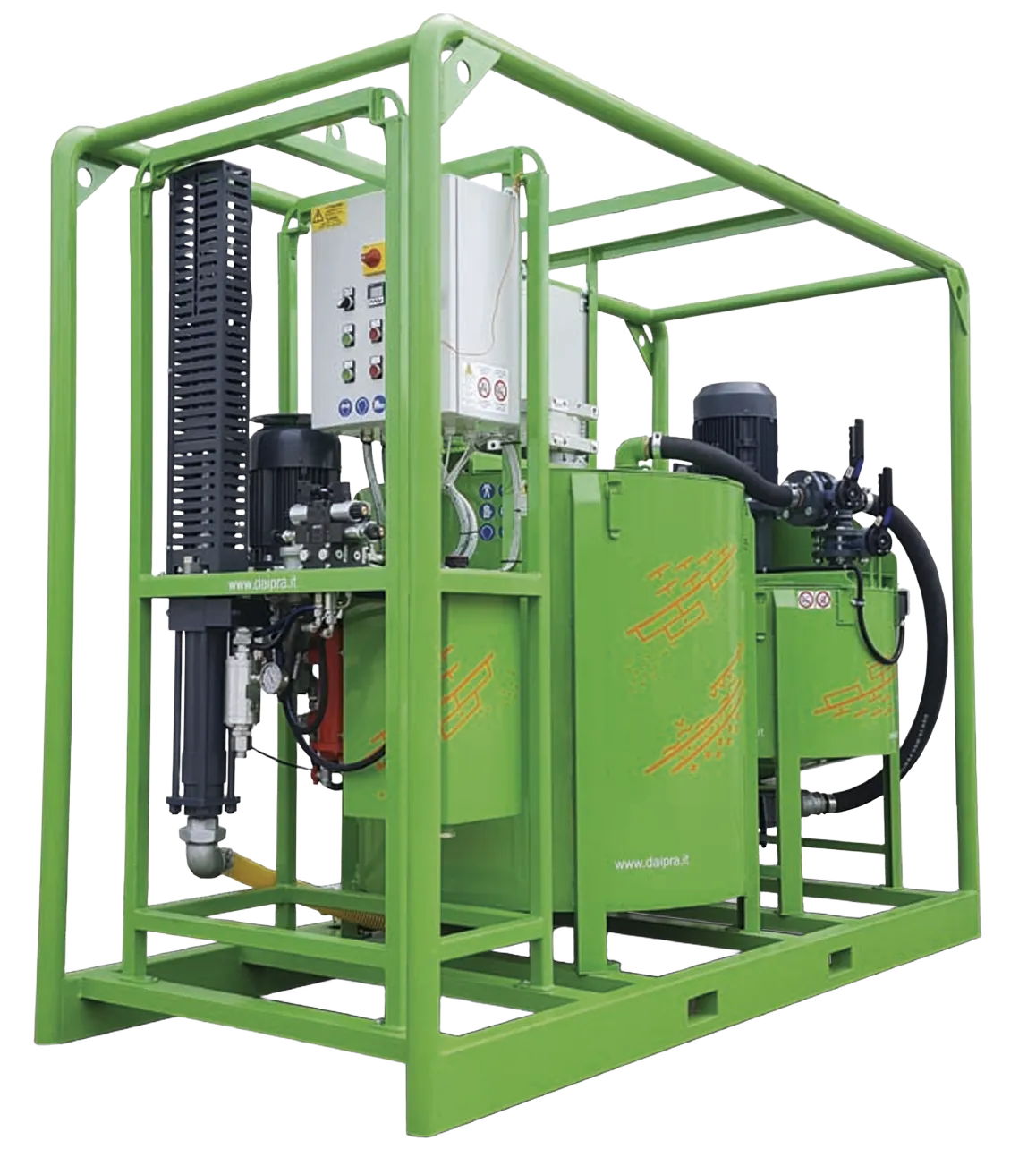
Manual
The operator manages operations directly.
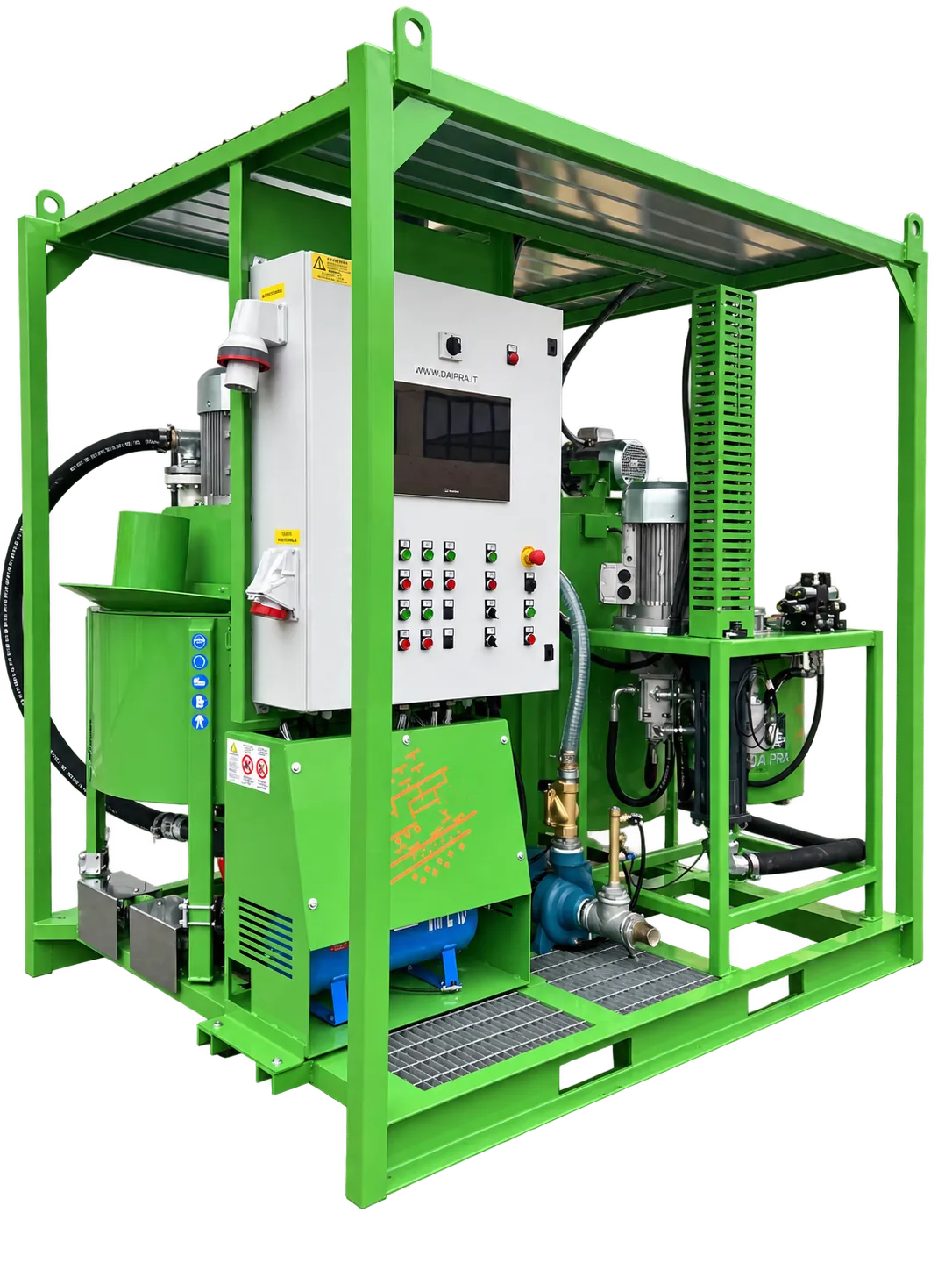
Automatic
The process is managed through the plant’s integrated control functions.
Manual, semi-automatic or automatic
All plants are available in three versions. In the manual version, the operator controls mixing and pumping directly. The semi-automatic version adds load cells to batch the mix, or pump control. In the automatic version, the data logger regulates mixing and grouting, stops pumping at the set pressure or volume and adjusts the parameters automatically.
Automation functions
- Process control
- Recipe setting
- Weighing of the mix and its components
- Controlled grouting
To understand the difference between data recording, stopping at set limits and automatic control, see the guide to the data logger integrated in our grout pumps. The functions to integrate are defined for the chosen configuration.
Explore automation02Number and type of pumps
Start from the grout mix and the flow rate and pressure required on each line. Choose the pumping technology and state how many grouting points you want to supply.
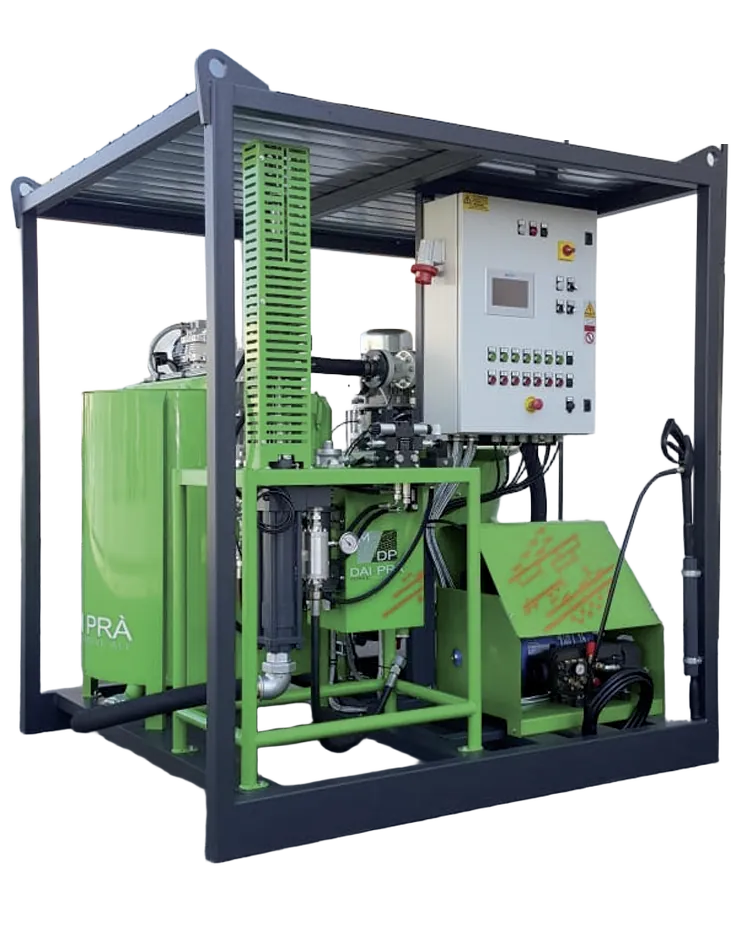
Piston pump
High pressure
For grouting that requires high pressures.
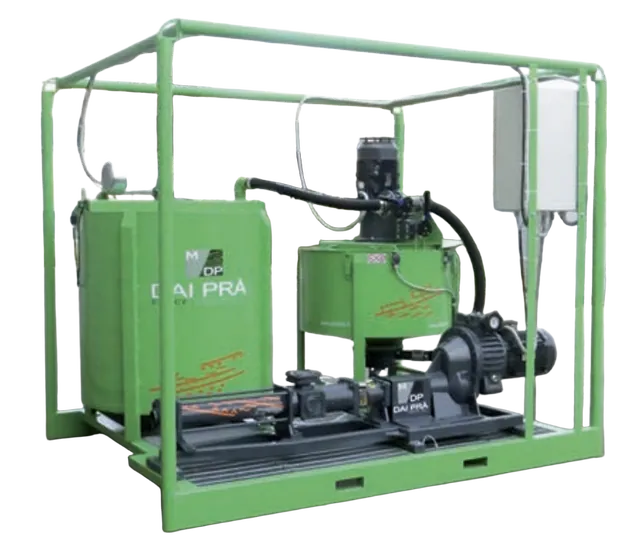
Screw pump
Low pressure, high flow rate
For work that requires a higher flow rate at low pressure.
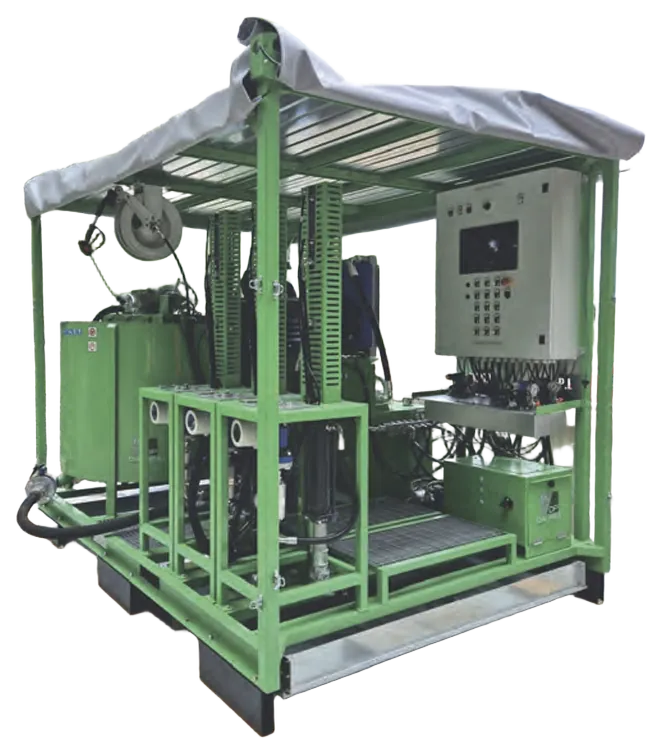
One or more pumps side by side
You can choose one or more piston pumps installed side by side. The number of pumps and the line layout are defined with our technical team according to the site’s needs.
State whether the lines must work simultaneously or alternately and whether they need different settings. The number and model of pumps must be sized together with the tanks, power supply and control system to meet the expected grout demand.
03Powering your plant
Depending on the resources available on site.
Hydraulic
Hydraulically powered plant.
Diesel
Diesel-powered plant.
Pneumatic
Plant powered by compressed air.
Electric
Electrically powered plant.
For an electric supply, tell us the voltage and power available: the plant’s requirement includes pumps, mixer, agitator and any accessories. For compressed air, state the compressor’s pressure and flow rate. For an external hydraulic power unit, check the pressure and flow rate available at the carrier machine’s couplings.
A diesel engine, on the other hand, is a configuration option to be agreed with the technical team: not every power option is available for every combination of components.
04Tank sizes and loading
Customise both the capacity in litres and the unit’s footprint, taking into account the mix preparation rate and the space available.
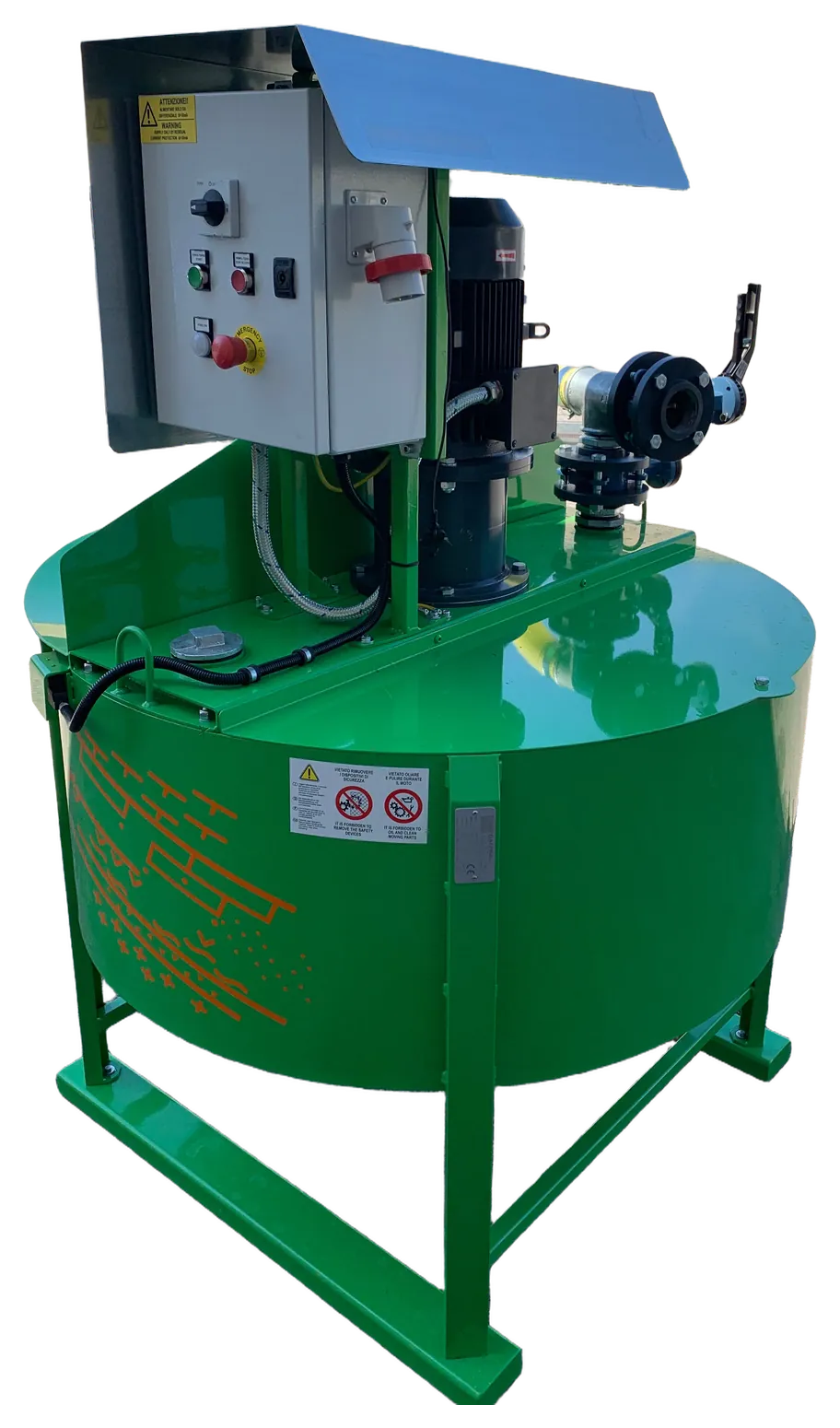
Mixing tank
Prepares each batch according to the planned recipe and mixing time.
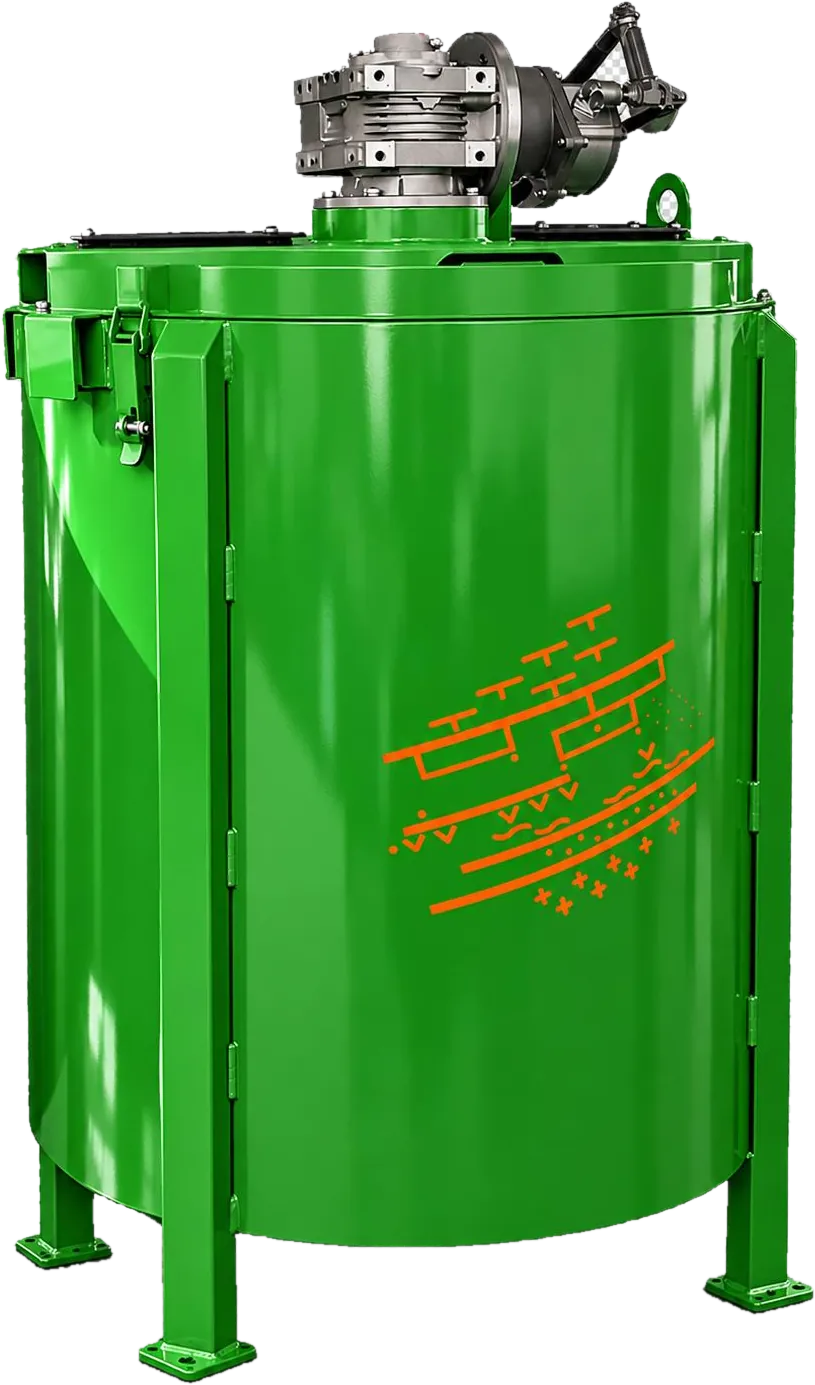
Agitator tank
Keeps the grout moving and ready to feed the pump.
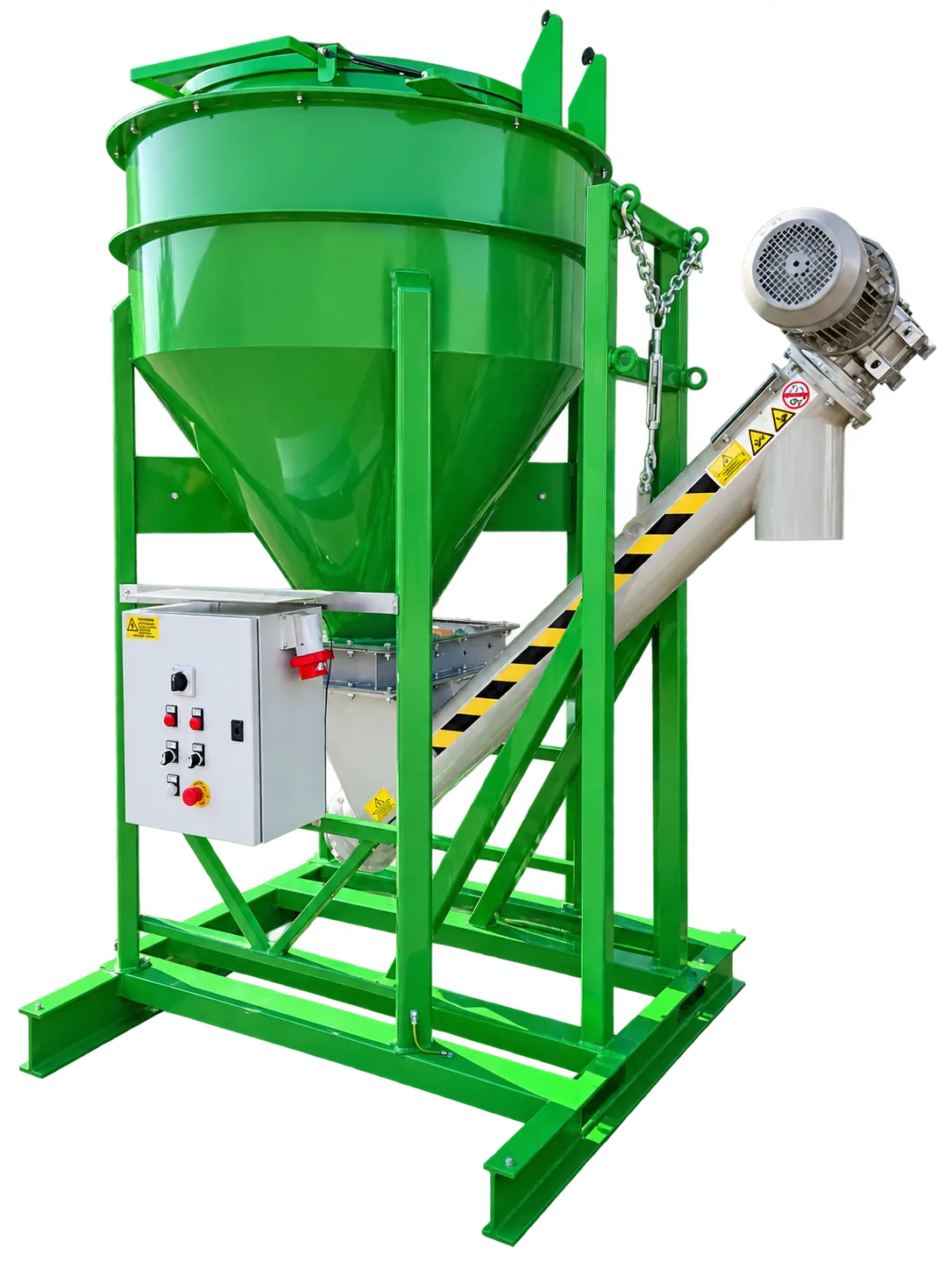
Big bag silo
Loads cement and powders from the big bag into the colloidal mixer via a screw conveyor, reducing manual bag opening.
Mixing and agitation play different roles
The mixing tank prepares each batch; the agitator tank keeps the grout moving and ready for pumping. Their capacities are chosen together, based on the recipe, the preparation time and the pumps’ consumption.
- Capacity: state the volume of each batch and how many grout lines need to be supplied.
- Loading: describe how water and materials arrive and how often they are loaded.
- Space: tell us the available length, width and height, access and transport constraints, leaving room for cleaning and maintenance.
You can start from the capacities of the standard plants and request a different combination. With several pumps side by side, sizing must account for the combined demand of the active lines.
05Options and configurations
Complete the configuration based on the materials used and the working environment.
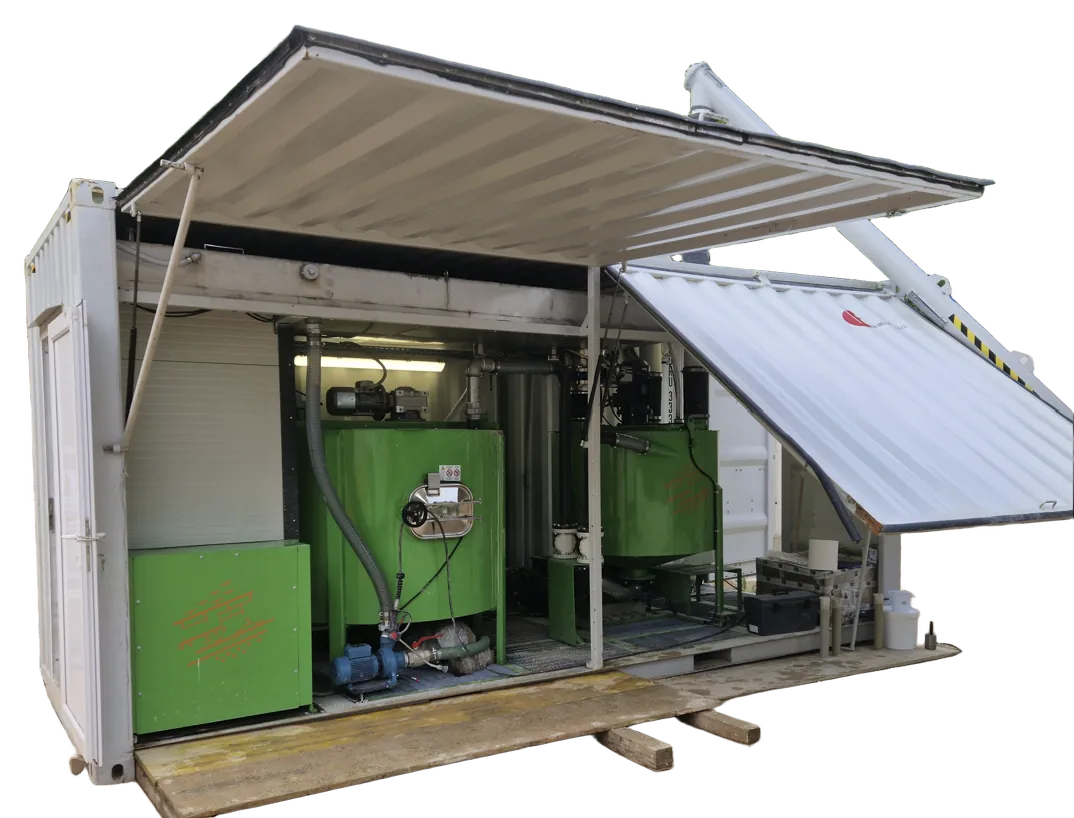
Containerised
Plant built into a container, with a component layout defined for the project.
Also available in a self-lifting configuration, to be defined at the design stage.
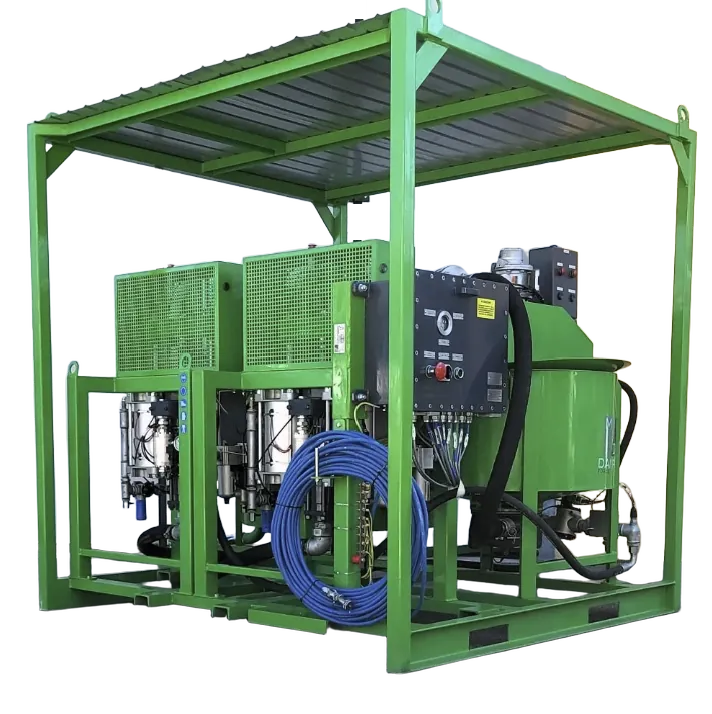
ATEX configuration and certification
If the project requires a plant for a potentially explosive atmosphere, state the site’s ATEX requirements from the outset.
Equipment, compatibility and certification documentation must be verified for the specific configuration: they are not standard on all plants.
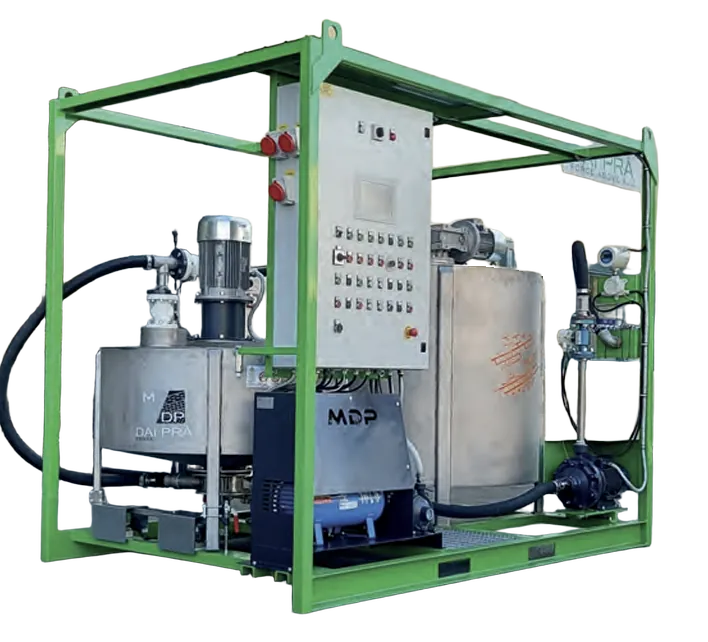
Stainless steel components
For corrosive mixes or substances, you can request stainless steel components. Tell us the composition of the products used so we can identify which parts in contact with the mix should be made of stainless steel.
Material selection and compatibility with the substances are checked for the specific application.